
América Latina – Continente americano: American continen…
América Latina – Continente americano: American continen…
{
“@context”: “https://schema.org”,
“@type”: “NewsArticle”,
“mainEntityOfPage”: {
“@type”: “WebPage”,
“@id”: “https://bomdiaamericablog.com/pt-241/”
},
“headline”: “American continent: Latin America: 8 books to understand its diversity and challenges”,
“description”: “American continent: Latin America: 8 books to understand its diversity and challenges. {n “@context”: “https://schema.”,
“image”: {
“@type”: “ImageObject”,
“url”: “https://www.bomdiaamericablog.com/wp-content/uploads/2023/08/cropped-logo-BDA-blog-1.png”,
“width”: 600,
“height”: 60
},
“datePublish”: “2026-04-11T23:30:22Z”,
“dateModified”: “2026-04-29T20:19:07Z”,
“author”: {
“@type”: “Person”,
“name”: “Antonio Carlos Faustino”
},
“publisher”: {
“@type”: “Organization”,
“name”: “Bom Dia Amu00e9rica Blog”,
“logo”: {
“@type”: “ImageObject”,
“url”: “https://www.bomdiaamericablog.com/wp-content/uploads/2023/08/cropped-logo-BDA-blog-1.png”,
“width”: 600,
“height”: 60
}
}
}
Continente americano
{
“@context”: “https://schema.org”,
“@type”: “NewsArticle”,
“mainEntityOfPage”: {
“@type”: “WebPage”,
“@id”: “https://bomdiaamericablog.com/pt-241/”
},
“headline”: “8 books to understand its diversity and challenges”,
“description”: “Explore 8 insightful books that delve into Latin American diversity challenges, offering a rich perspective on its complexities and cultural richness.”,
“image”: {
“@type”: “ImageObject”,
“url”: “https://www.bomdiaamericablog.com/wp-content/uploads/2023/08/cropped-logo-BDA-blog-1.png”,
“width”: 600,
“height”: 60
},
“datePublished”: “2026-04-11T23:30:22Z”,
“dateModified”: “2026-04-24T20:31:45Z”,
“author”: {
“@type”: “Person”,
“name”: “Antonio Carlos Faustino”
},
“publisher”: {
“@type”: “Organization”,
“name”: “Bom Dia América Blog”,
“logo”: {
“@type”: “ImageObject”,
“url”: “https://www.bomdiaamericablog.com/wp-content/uploads/2023/08/cropped-logo-BDA-blog-1.png”,
“width”: 600,
“height”: 60
}
}
} continente americano.
Latin American diversity challenges
continente americano.
(adsbygoogle = window.adsbygoogle || []).push({});
American Continent
When we seek to understand the complexities of a continent as rich and diverse as Latin America, we discover that there are no easy answers or linear paths. Here at Bom dia, América! we are convinced that knowing the past and present of this territory, with all its contradictions, is an essential part of imagining a more just future. For this reason, we created this article to offer, in a humanized and up-to-date manner, a critical perspective on Latin American diversity and to suggest readings that open doors to plural and questioning interpretations. American continent. continente americano.
In a continent where every corner breathes a mixture of cultures, beliefs, wounds and hopes, books remain bridges that span centuries of history.” American continent. continente americano.
The Meaning of Latin American Unity: Latin American Peoples’ Unity Day
Celebrated on March 24, Latin American Peoples’ Unity Day invites reflection on what unites us and what differentiates us. Since the 19th century, the term “Latin America” has not had a single meaning. Sometimes it includes only the Spanish- and Portuguese-speaking countries of South America, Central America and Mexico; on other occasions, it also encompasses Guyana, Suriname and Caribbean territories such as Antigua and Barbuda, the Bahamas, Barbados and Belize. American continent. continente americano.
Latin American identity exists in diversity, not in homogeneity.
This day, in addition to celebrating roots shared through European colonialism, draws attention to the immense variety of experiences, languages and ways of being in the world. We are the product of the clash between indigenous peoples—such as the Maya, Aztec and Inca—and Spanish, Portuguese and French colonizers, who left languages, legal systems and culinary traditions. But there are also legacies of enslaved African populations and immigrants from around the world. American continent. continente americano.
Today, Latin America is characterized by an incredible religious plurality, popular festivals, music, syncretism and a cuisine where corn and cassava mingle with flavors from four continents. American continent. continente americano.
Before and After European Colonization
Before the arrival of Europeans, the Latin American continent was inhabited by indigenous societies with advanced agricultural systems, their own writing, astronomy and vast cities. However, colonization was a violent process based on cultural imposition, slavery and genocide. The Maya, Aztec and Inca empires were almost destroyed, and many indigenous peoples continue to struggle against exclusion to this day. American continent. continente americano.
In the 19th century, influenced by Enlightenment ideas and the winds of American independence, several countries fought Herculean struggles against the European metropoles. Even after independence, inequalities of race, gender and class persisted strongly. American continent. continente americano.
Dictatorships, Democracy and the Challenge of Social Justice
In the 20th century, many Latin American countries experienced long periods under authoritarian regimes, with repression, censorship and serious human rights violations. In recent decades, social, indigenous, feminist and labor movements have led processes of redemocratization, but the rise of authoritarian and far-right groups still threatens the region. American continent. continente americano.
Another inevitable challenge is inequality: the richest 10% hold 34.2% of income, while the poorest 10% have only 1.7%, according to recent ECLAC data (extreme income concentration in Latin America). It is in this context, with so many knots and potentialities, that we recommend the following readings. American continent. continente americano.
Why Read About Latin America Today?
On the journey of Bom dia, América!, we have encountered readers seeking to decipher the enigmas of this continent. Books do not offer prefabricated answers, but, like windows, they broaden horizons, stimulate debates and promote empathy. We have selected eight titles published by Editora da Unicamp capable of illuminating central themes, from politics to art, from the environment to the economy. American continent. continente americano.
A good book is always an invitation to a dialogue between times, places and ideas.
Our suggestions aim to show how thinking about Latin America is, above all, defending respect for its social, ethnic, gender and cultural plurality. They are ideal books for those who have already questioned the meanings and limits of the term “Latin American.” American continent. continente americano.
Eight Books to Dive Into Latin America
We now present the titles selected in our critical curation. They offer different perspectives on the colonial legacy, social movements, contemporary political dilemmas and Latin American creative strength. American continent. continente americano.
1. The Role of Liberal Think Tanks: “Between the International Foundation for Liberty and Liberal Think Tanks in Latin America,” by María Julia Giménez
María Julia Giménez’s book investigates how think tanks linked to liberal ideas operated actively between 2002 and 2016 in disseminating political and economic discourses in Latin America. Analyzing the trajectory of the International Foundation for Liberty, Giménez questions the neutrality of these forms of knowledge production and their direct influence on national and regional agendas. American continent. continente americano.
The work is essential to understand why certain economic models gain momentum in the region and how business, intellectual and media networks coordinate beyond formal political parties. American continent. continente americano.
Reading this book allows us to rethink how invisible power shapes Latin America and its economic projects.
2. Protests in Chile and New Forms of Democracy: “Does Indignation End Hope? Notes on the Popular Movement in Chile,” by Pierre Dardot
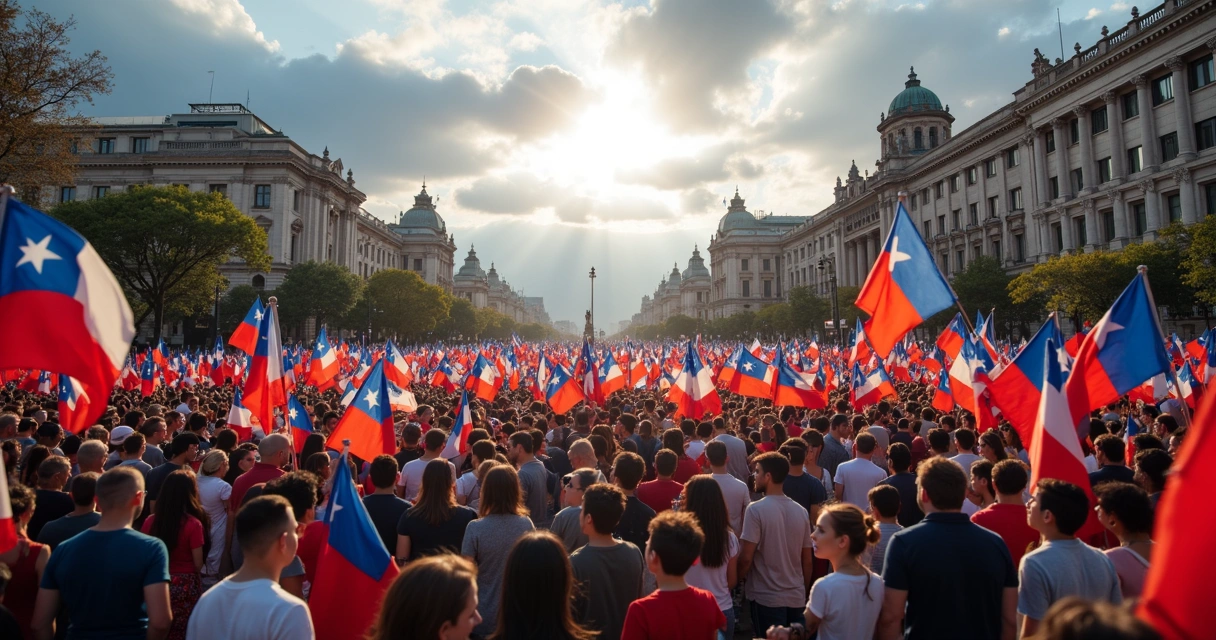
Pierre Dardot starts from the symbolic increase in Santiago’s metro fare in 2019 to address the spark that ignited the protests that took to the Chilean streets. His book debates how social dissatisfaction with neoliberalism, inequality and the crisis of democracy led thousands to the streets, proposing that episodes like this are warnings about the limits of the Chilean economic model, once seen as an example of success. American continent. continente americano.
By analyzing the protests, Dardot discusses not only the local context but also the youth, feminist and indigenous manifestations that spread across the continent. American continent. continente americano.
The Chilean experience is a warning: democracy is always under construction and depends on constant popular participation. This book helps us understand the challenges and prospects of democracy in the region, in line with our content’s debate on democracy in Latin America. American continent. continente americano.
3. Democratic Radicalism: “Latin America: A History of Radical Projects,” by Fabio Luis Barbosa dos Santos
Structured in three parts, Fabio Luis Barbosa dos Santos’s work offers a comparative study of radical democratization projects, referring to three great thinkers: José Martí (Cuba), Juan B. Justo (Argentina) and Ricardo Flores Magón (Mexico). The author discusses how ideas of justice, participation and equality were translated into each country’s politics. American continent. continente americano.
The book recovers episodes ignored by dominant media, questions consensuses and provokes new interpretations of Latin American history. A reading that illuminates alternative paths, political utopias and the role of the left and popular movements. American continent. continente americano.
“Democratic radicalism is in the details of daily life, not only in grand manifestos.”
4. Workers, Popular Unity and the Chilean Experience: “Nothing Will Be the Same Again?”, by Márcia Cury
Márcia Cury delves into the experiences and political practices of Chilean workers during the Popular Unity government (1970-1973), led by Salvador Allende. With an analytical narrative that is also sensitive to individual trajectories, the book shows how workers faced an unprecedented proposal for social transformation, marked by democracy, direct participation and confrontations with conservative sectors. American continent. continente americano.
This book is essential for engaging with the discussions proposed in other articles about social conflicts and geopolitics in the Americas, highlighting that, regardless of the outcomes, new forms of political action were experimented with. American continent. continente americano.
5. Higher Education: Expansion, Dilemmas and Inequalities: “Higher Education in Latin America,” edited by Simon Schwartzman
In this publication, Simon Schwartzman brings together a group of researchers to analyze, using data from 1960 onward, the development of higher education in the region. An effort is made to compare with the United States and South Korea, showing why progress in Latin America has been uneven and what challenges remain, such as inclusion, funding and quality across the American continent. continente americano.
The book is an invitation to consider how universities, public policies and social movements can fight for greater equity, diversity and autonomy in Latin American higher education.
It addresses topics notably discussed in the article Diversity in the Americas: Why it is essential to maintain inclusion programs.
 6. Nature and Society: “Interdisciplinary Dialogues on the Environment,” organized by Leila da Costa Ferreira
This book proposes an interdisciplinary perspective to consider environmental challenges in Latin America, integrating sustainability, public policy and environmental sociology. Highlighting how socio-environmental problems disproportionately affect indigenous, Afro-descendant and marginalized populations, the collection encourages research and policies based on dialogue between different fields of knowledge.
It is a recommended read for those interested in the relationships between agricultural practices, environmental preservation and social justice—urgent concerns in a continent that, according to ECLAC and FAO, needs to address specific vulnerabilities in rural territories of Afro-descendant populations (socioeconomic situation of rural Afro-descendant populations).
7. Art, Culture and Internationalization: “The São Paulo Biennial and the International Circuit of Latin American Art,” by Maria de Fátima Morethy Couto
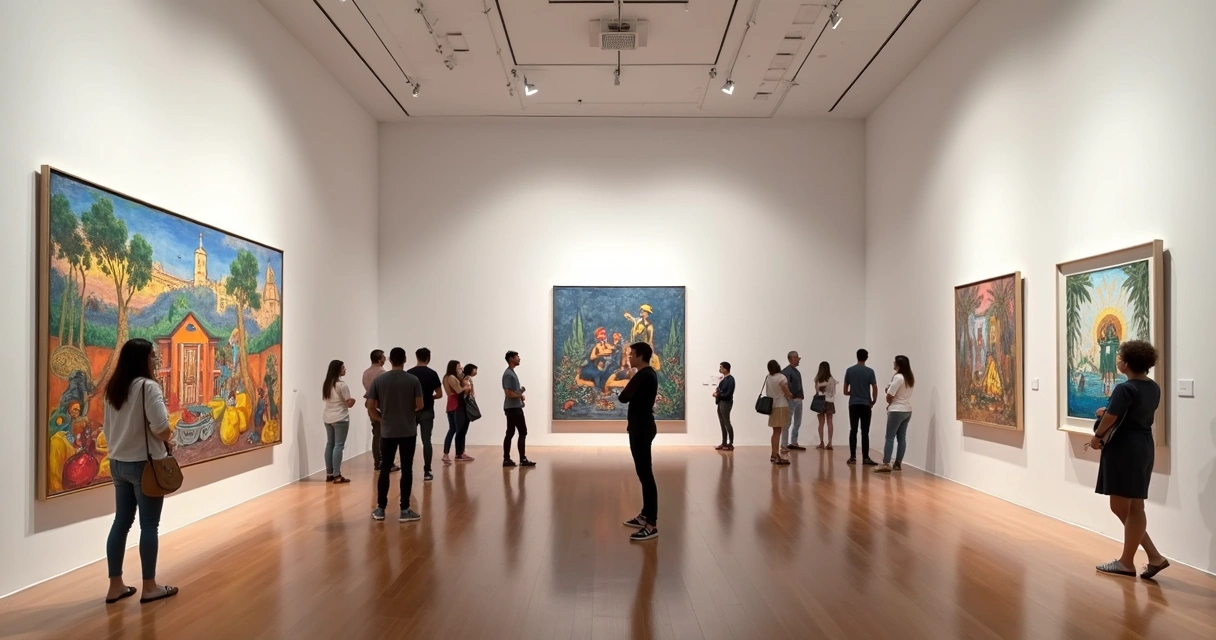
Maria de Fátima Morethy Couto’s research examines how the São Paulo Biennial served as a bridge between artists and curators from different parts of the continent. The book discusses strategies for the internationalization of Latin American art, including participation in exhibitions such as the Venice Biennale and recognition within global circuits.
Artistic activities, as we state in our analyses, are never separate from social and political struggles. With this study, it becomes clear that art can both reveal and transform the perception of who we are, especially in contexts of tensions and international dialogues.
 8. Publishing History, Migrations and Politics: “Editora Abril Argentina,” by Eugenia Scarzanella
Closing our list, Eugenia Scarzanella’s book offers an original narrative about Editora Abril, founded in Argentina but in direct dialogue with Italy and Brazil. The author examines how this publishing company accompanied the Argentine political context from Peronism to the 1976 military coup, addressing migrations, cultural production and memory.
In addition to revealing little-known stories of the publishing market, the book invites reflection on cultural and political exchanges between Latin America and Europe, highlighting how ideological tensions and migratory processes can impact the intellectual development of a society.
 From Reading to Engagement: Recommended Products
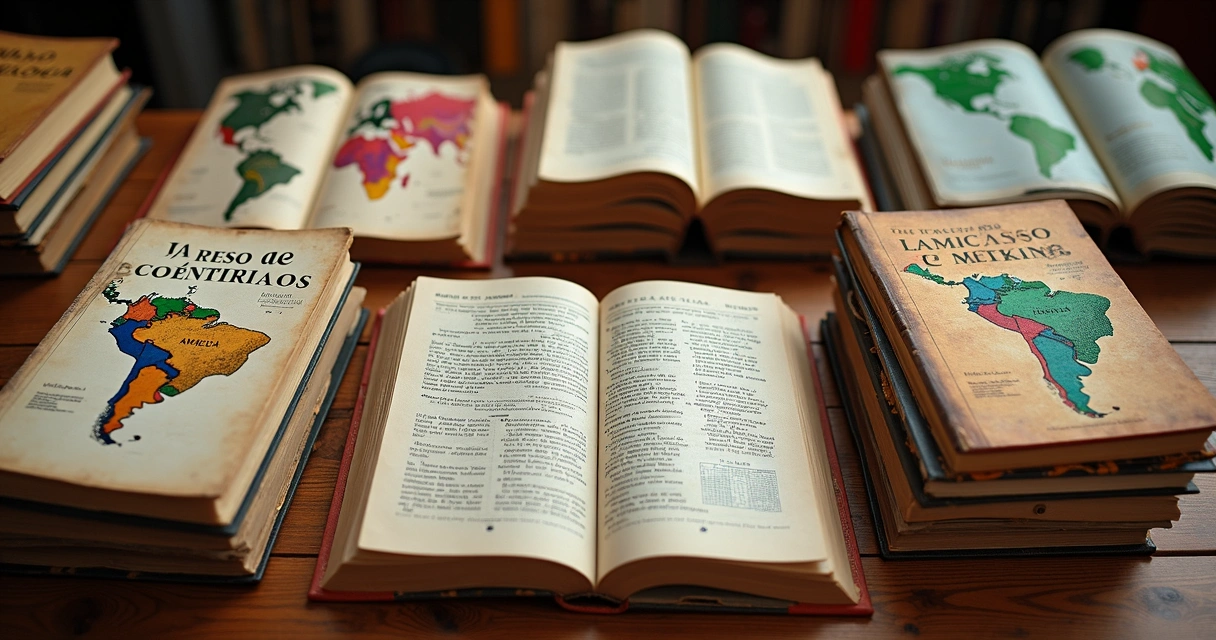
For those who wish to deepen the reflective experience opened by the authors mentioned, we suggest three relevant products, with affiliate links, that expand the debate proposed in this list about books, culture and Latin American history:
- “Economic Formation of Brazil,” by Celso Furtado – Amazon
- A classic of Latin American economics, essential for those who want to understand the historical roots and current dilemmas of underdevelopment. It analyzes the links between colonization, social inequality, international dependency and local potentials for change.
- “Open Veins of Latin America,” by Eduardo Galeano – Amazon
- A work that addresses topics such as imperialism, natural resource exploitation, popular resistance and Latin American identity, proposing a vivid and critical narrative about five centuries of the continent’s history.
- Online Course “History of Latin America” – Hotmart
- For those seeking a didactic and updated approach to the main political, economic and cultural episodes of the continent, this course offers multimedia resources and discussion forums, allowing autonomous and critical learning.
References, Data and Numbers: Why Does Latin America Remain a Challenge?
The books we suggest actively engage with issues raised by organizations such as ECLAC, FAO and UNFPA. The most recent statistical survey, available in the Statistical Yearbook of Latin America and the Caribbean 2022, reveals trends in sociodemographic, economic and environmental development. According to analyses already cited and deepened in our article, the concentration of income and the persistence of racial inequalities challenge advances in democracy and social welfare.
In addition, studies on the realities of Afro-descendant groups in rural territories (ECLAC and FAO) and on urban living conditions and the matrix of social inequality (ECLAC and UNFPA) reinforce that any proposal for transformation must consider ethno-racial criteria and territorial justice.
Understanding Latin American diversity also means confronting its wounds and its possibilities.
Multiplicity, Resistance and Future
By bringing together these books and recommendations, we seek to inspire our reader to formulate questions, seek answers and transform their relationship with what we call Latin America. Each of the works presented captures a spark of this diversity: narratives that do not hide conflicts but point to new collective solutions.
How to Broaden the Debate?
Editora da Unicamp’s catalog offers a variety of titles for all profiles: from beginner readers to specialists. Look to expand your library with works focused on history, politics, art, social justice and contemporary Latin American thought.
We remind you that social challenges, the pursuit of equity and the defense of democracy are topics regularly addressed in Bom dia, América! and run through the books recommended here. We believe our commitment is to build bridges between critical analysis and social transformation, always based on up-to-date data, reliable references and pluralist visions.
If you believe in the power of knowledge and value authentic and in-depth content about our continent, we invite you to subscribe to our newsletter and support Bom dia, América! Let us together promote debate, education and the appreciation of Latin American diversity. Discover new titles, stories and perspectives to truly transform our present and our future.
References
- BARBOSA DOS SANTOS, Fabio Luis. Latin America: A History of Radical Projects. Campinas: Editora da Unicamp, 2019.
- COUTO, Maria de Fátima Morethy. The São Paulo Biennial and the International Circuit of Latin American Art. Campinas: Editora da Unicamp, 2021.
- CURY, Márcia. Nothing Will Be the Same? Workers and Political Practice in Chile’s Popular Unity. Campinas: Editora da Unicamp, 2022.
- DARDOT, Pierre. Does Indignation End Hope? Notes on the Popular Movement in Chile. Campinas: Editora da Unicamp, 2020.
- FERREIRA, Leila da Costa (Org.). Interdisciplinary Dialogues on the Environment. Campinas: Editora da Unicamp, 2018.
- GIMÉNEZ, María Julia. Between the International Foundation for Liberty and Liberal Think Tanks in Latin America. Campinas: Editora da Unicamp, 2020.
- SCARZANELLA, Eugenia. Editora Abril Argentina: Immigration, Politics and Culture. Campinas: Editora da Unicamp, 2017.
- SCHWARTZMAN, Simon (Org.). Higher Education in Latin America. Campinas: Editora da Unicamp, 2012.
- Communications and publications from ECLAC, FAO and UNFPA: Available at https://www.cepal.org/pt-br
Did you enjoy our content? Consider supporting the Bom Dia América Blog.
🔗 Ofertas e recomendações
(adsbygoogle = window.adsbygoogle || []).push({});
Gostou do nosso conteúdo? Considere apoiar o Bom Dia América Blog para que possamos continuar trazendo análises e notícias relevantes sobre as Américas.