
Economia americana
economia americana.
{“@context”: “https://schema.org”, “@type”: “NewsArticle”, “headline”: “Earth Day in the Americas: A Call to Collective Consciousness”, “description”: “{“@context”: “https://schema.org”, “@type”: “NewsArticle”, “headline”: “Earth Day in the…”, “image”: “https://bomdiaamericablog.com/wp-content/uploads/2025/12/229.png”, “datePublished”: “2025-12-13T12:25:39”, “dateModified”: “2025-12-21T23:36:18”, “author”: {“@type”: “Person”, “name”: “Antonio Carlos Faustino”}, “publisher”: {“@type”: “Organization”, “name”: “Bom Dia América Blog”, “logo”: {“@type”: “ImageObject”, “url”: “https://bomdiaamericablog.com/logo.png”}}, “mainEntityOfPage”: {“@type”: “WebPage”, “@id”: “https://bomdiaamericablog.com/earth-day-in-the-americas-a-call-to-collective-consciousness/”}}
{“@context”: “https://schema.org”, “@type”: “NewsArticle”, “headline”: “Earth Day in the Americas: A Call to Collective Consciousness”, “description”: “Earth Day, celebrated annually on April 22, serves as a pivotal call to action for environmental conservation across the Americas. […]”, “image”: “https://bomdiaamericablog.com/wp-content/uploads/2025/12/229.png”, “datePublished”: “2025-12-13T12:25:39”, “dateModified”: “2025-12-21T23:14:33”, “author”: {“@type”: “Person”, “name”: “Antonio Carlos Faustino”}, “publisher”: {“@type”: “Organization”, “name”: “Bom Dia América Blog”, “logo”: {“@type”: “ImageObject”, “url”: “https://bomdiaamericablog.com/logo.png”}}, “mainEntityOfPage”: {“@type”: “WebPage”, “@id”: “https://bomdiaamericablog.com/earth-day-in-the-americas-a-call-to-collective-consciousness/”}}
{“@context”: “https://schema.org”, “@type”: “NewsArticle”, “headline”: “Earth Day in the Americas: A Call to Collective Consciousness”, “description”: “Earth Day, celebrated annually on April 22, serves as a pivotal call to action for environmental conservation across the Americas. […]”, “image”: “https://bomdiaamericablog.com/wp-content/uploads/2025/12/229.png”, “datePublished”: “2025-12-13T12:25:39”, “dateModified”: “2025-12-13T12:26:04”, “author”: {“@type”: “Person”, “name”: “Antonio Carlos Faustino”}, “publisher”: {“@type”: “Organization”, “name”: “Bom Dia América Blog”, “logo”: {“@type”: “ImageObject”, “url”: “https://bomdiaamericablog.com/logo.png”}}, “mainEntityOfPage”: {“@type”: “WebPage”, “@id”: “https://bomdiaamericablog.com/earth-day-in-the-americas-a-call-to-collective-consciousness/”}}
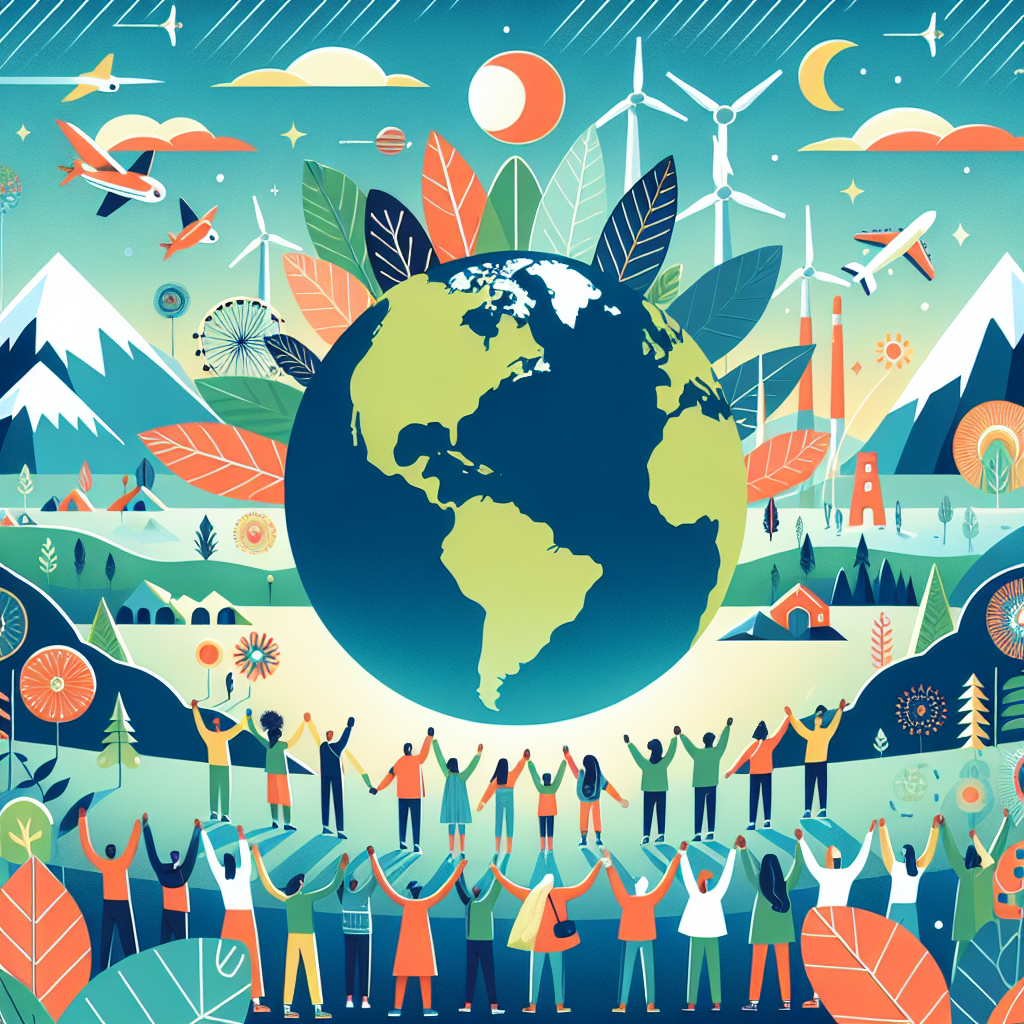
Earth Day, celebrated annually on April 22, serves as a pivotal call to action for environmental conservation across the Americas. From Alaska to Patagonia, this day underscores the pressing environmental issues that demand the attention of American citizens. It reflects on the societal and governmental efforts—or the lack thereof—aimed at protecting our planet.
Earth Day originated in 1970 in the United States, spearheaded by Senator Gaylord Nelson in response to a surge in environmental disasters and insufficient sustainable public policies. The inaugural event united approximately 20 million Americans through protests, lectures, and public actions. The movement rapidly gained international momentum, and by 1990, the United Nations had officially recognized Earth Day as a global event. Today, it mobilizes over 1 billion people across more than 190 countries.
The American continent is home to diverse and rich biomes, including the Amazon, the Pantanal, the Rocky Mountains, and Canada’s temperate forests. However, these regions face significant environmental threats: accelerated deforestation, particularly in South America, river and ocean contamination, desertification of agricultural lands, urban pollution in major cities, and the intensive exploitation of mineral resources and fossil fuels. According to a report by the Economic Commission for Latin America and the Caribbean (ECLAC), one in every three inhabitants in Latin America lives in areas at environmental risk (ECLAC, 2022).
(adsbygoogle = window.adsbygoogle || []).push({});
In the United States and Canada, there is a notable dichotomy between progress in green technology and ongoing environmental challenges. The US remains the second-largest emitter of CO₂ globally, only surpassed by China. Despite advanced environmental policies, Canada is still heavily reliant on oil extraction, particularly from the Alberta tar sands. The US’s withdrawal from the Paris Agreement during Donald Trump’s presidency (2017–2021) highlighted ongoing tensions between economic growth and sustainability (United Nations, 2017).
Latin American countries, while rich in biodiversity, are particularly vulnerable to extreme weather events. Droughts in Mexico, floods in Brazil, hurricanes in the Caribbean, and forest fires in Chile and Argentina have profound impacts on communities. Despite these challenges, innovative environmental responses have emerged in the region. Costa Rica is hailed as a model for clean energy, with over 98% of its energy matrix being renewable (International Renewable Energy Agency, 2023). Uruguay is recognized for its reforestation policies, while Ecuador and Bolivia have enshrined the rights of nature in their constitutions (World Wildlife Fund, 2023).
Indigenous peoples and social movements play a crucial role in environmental conservation in the Americas. Their sustainable management practices and worldviews serve as natural barriers against climate collapse. Movements such as Fridays for Future Latin America and Extinction Rebellion in Brazil and Argentina advocate for systemic, grassroots changes (Fridays for Future, 2023).
Earth – Perspectiva 1
(adsbygoogle = window.adsbygoogle || []).push({});
Despite these advancements, structural challenges persist. Many governments in the Americas lack comprehensive environmental education in school curricula, underinvest in sustainable public transportation, provide tax incentives to polluting industries, and demonstrate weakness in monitoring environmental crimes. There is a pressing need for countries to reassess their development models, agricultural strategies, and trade agreements, particularly those that promote large-scale agro-exports at the expense of forests and water sources (Greenpeace, 2023).
Earth Day in the Americas should transcend its symbolic nature, serving as an opportunity for self-evaluation at both individual and national levels. Critical questions include: What do I consume? Where does my energy come from? Does my country protect or destroy the environment? Are existing laws sufficient? Is there environmental justice for all? These inquiries encourage reflection and action, driving a collective consciousness necessary for meaningful change.
Earth Day acts as a call to responsible action, fostering intergenerational commitment and critical hope. The diverse and resilient continent of the Americas has the potential to lead a new era in environmental advocacy. By working together, individuals and nations can contribute to a sustainable future for the planet.
(adsbygoogle = window.adsbygoogle || []).push({});
Earth – Perspectiva 2
Livros sobre as Américas | Mapas e Atlas Geopolíticos | História da América Latina
Economic Commission for Latin America and the Caribbean (ECLAC). (2022). Environmental Panorama of Latin America and the Caribbean. Santiago: ECLAC.
United Nations. (2017). Paris Agreement. United Nations Treaty Collection. Retrieved from: https://treaties.un.org
(adsbygoogle = window.adsbygoogle || []).push({});
International Renewable Energy Agency. (2023). Renewable Energy Statistics. Retrieved from: https://www.irena.org
World Wildlife Fund. (2023). Nature’s Rights in Ecuador and Bolivia. Retrieved from: https://www.worldwildlife.org
Fridays for Future. (2023). Global Climate Strike. Retrieved from: https://fridaysforfuture.org
Earth – Perspectiva 3
(adsbygoogle = window.adsbygoogle || []).push({});
Greenpeace. (2023). Environmental Challenges in the Americas. Retrieved from: https://www.greenpeace.org
(adsbygoogle = window.adsbygoogle || []).push({});
Apoie o Bom Dia América Blog
Sua contribuição nos ajuda a continuar trazendo análises profundas sobre as Américas.
Contribuir Agora
Apoie o Bom Dia América Blog
Sua contribuição nos ajuda a continuar trazendo análises profundas sobre as Américas.
Contribuir Agora economia americana.
Apoie o Bom Dia América Blog
Sua contribuição nos ajuda a continuar trazendo análises profundas sobre as Américas.
Contribuir Agora economia americana.
Apoie o Bom Dia América Blog
Sua contribuição nos ajuda a continuar trazendo análises profundas sobre as Américas. economia americana.
Gostou do nosso conteúdo? Considere apoiar o Bom Dia América Blog para que possamos continuar trazendo análises e notícias relevantes sobre as Américas.