
continente americano.
In the heart of Latin America, a collective restlessness beats in search of answers to the environmental changes and challenges that affect our societies. The Environmental Humanities course stands out as a proposal for those who wish to see beyond statistics and understand lived experiences, local knowledge, and the connections between culture, nature, and human development. In this article, we at Good Morning, America! invite our readers to dive into an interdisciplinary approach to the ecological crisis, integrated with the Latin American reality, exploring unprecedented data, interviews, and narratives that resonate throughout the continent. continente americano.
Understanding the relationship between society and environment requires a new perspective.
Why are environmental humanities such a current topic in Latin America?
In recent years, public debates on climate justice, deforestation, urban pollution, land use changes, and the impact of large infrastructure projects have become increasingly common. The environmental humanities go against the grain of scientific fragmentation, proposing a vision that unites history, anthropology, literature, philosophy, biology, and economics to understand human impact on the planet. continente americano.
This course essentially arises as a response to questions such as:
- How do cultural values shape our perception of nature?
- What role do indigenous knowledges play in environmental conservation?
- Why do ecological disasters disproportionately affect vulnerable groups?
- What policies can promote sustainable development without sacrificing identities and ways of life?
These questions guide the most relevant discussions within environmental humanities courses, especially when we turn our gaze to Latin America, considering its historical, cultural, and ecological specificities. continente americano.
What are environmental humanities?
The field of environmental humanities arises from the desire to integrate different forms of knowledge to tackle complex problems. It is not enough to measure global temperature: it is necessary to interpret the meaning of environmental changes for societies, allowing space for multiple responses, including those produced by historically marginalized populations. continente americano.
According to data released by the ECLAC, environmental statistics encompass not only indicators of climate, water, or biodiversity but also reflect deep social dynamics, such as land occupation, urbanization, and access to natural resources. continente americano.
Within university courses, extension projects, and continuing education activities, interest in this interdisciplinary approach is growing. Our readers at Good Morning, America have been seeking broader and more integrated information, in tune with this trend. continente americano.
Latin America: environmental, cultural, and social diversity
Latin America stands out for the richness of its biomes, its variety of languages and cultures, and is also the stage for numerous socio-environmental conflicts. Courses on environmental humanities need to consider: continente americano.
- Amazônia, Cerrado, Pantanal, Andes, pampas, and tropical forests
- Indigenous peoples, traditional communities, and new urban diasporas
- Impacts of mining, agriculture, urbanization, and megaprojects
- Social movements for environmental justice, territorial rights, and food sovereignty
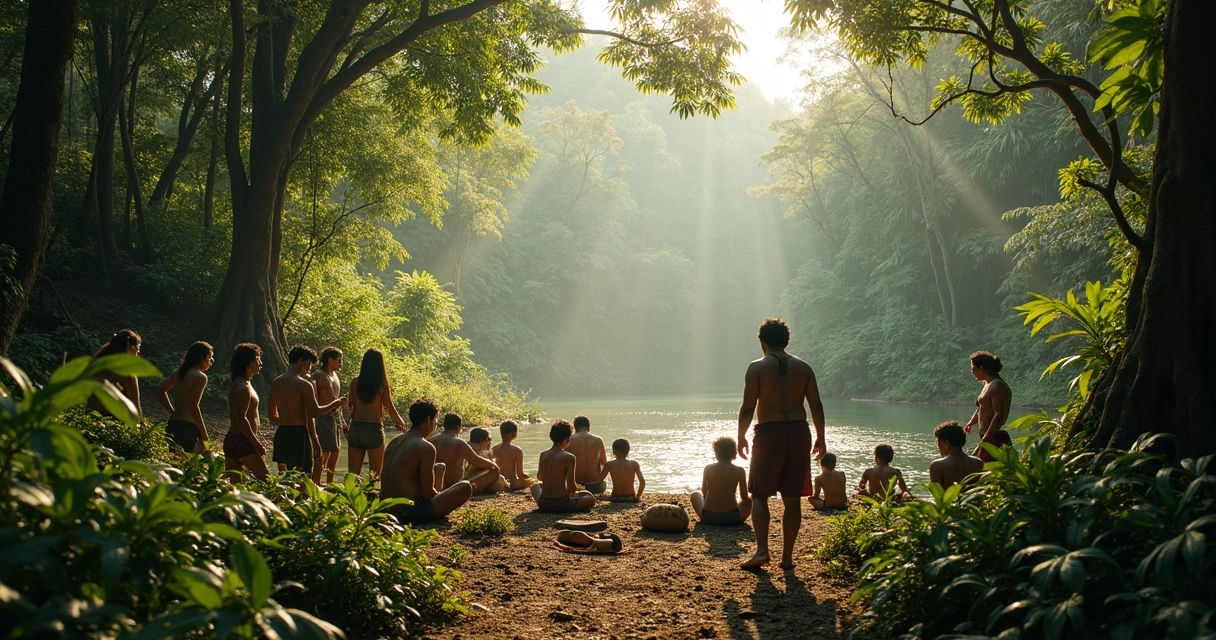
We experience on our continent, with a unique intensity, the conflict between global economic interests, local policies, and the rights of populations. In this scenario, understanding diversity and cultural values is fundamental in building solutions for the sustainable future of the region.
How is an environmental humanities course structured?
In our experience, Latin American courses are based on several pillars:
- Interdisciplinary approach: intersection of natural, human, and social sciences
- Study of local cases and regional analyses, valuing lived experiences
- Debates on indigenous and traditional epistemologies
- Participatory methods: field research, extension projects, discussion circles, artistic workshops, and literary productions
- Ethical reflection on collective responsibility, environmental justice, and human rights
Each semester is often composed of thematic modules:
- Fundamentals of environmental humanities
- History of ecological thought in the Americas
- Social impacts of environmental disasters
- Art, literature, and narratives about nature
- Ancient knowledge and sustainability
- Public policies and social transformations
We also highlight the growing use of audiovisual resources, documentaries, podcasts, and transdisciplinary activities, which allow new forms of dialogue between different knowledges and experiences.
Environmental statistics as a starting point
According to the FAO, environmental statistics inform about interconnected natural and social processes: water, climate, biodiversity, land use and management, energy production, waste, and access to sanitation. When we analyze this data through the lens of the humanities, we see how historical inequalities manifest in environmental policies, directly affecting the daily lives of millions of Latin Americans.
A recent report from the ECLAC, released in December 2025, highlighted advances in the production of indicators but also warned of the lack of human and financial resources. This hinders the articulation between statistical institutes and environmental ministries, limiting access to quality information for civil society.
Producing and interpreting environmental statistics is a decisive step towards just and effective public policies.
The role of integrated environmental accounts
Another relevant point in our research journey is the environmental accounts, which connect economic, social, and biophysical dimensions. They make it possible to analyze the management of natural assets, track flows of supply and use of the environment, and propose synthetic indicators – sharp for decision-making at the
Gostou do nosso conteúdo? Considere apoiar o Bom Dia América Blog.
Apoie o Blog!