

Continente americano
⏱️ Reading Time: 7 minute(s) continente americano.
“`html
Lithium: The Billionaire Battle No One Sees
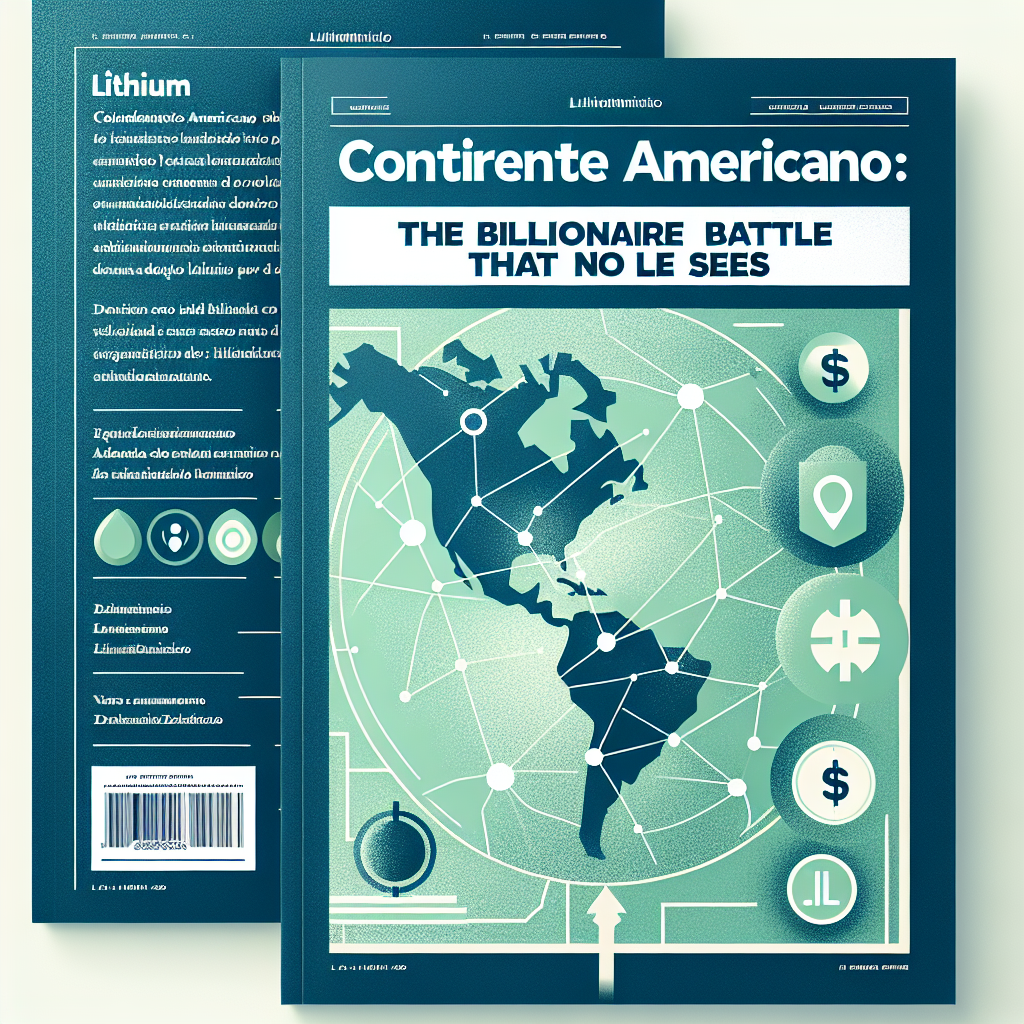

Imagine a metal that powers the future of energy, a resource so valuable that it is reshaping geopolitical alliances and impacting entire communities. That metal is lithium, and Latin America is the epicenter of its frenzied race. But what is really happening behind this billionaire battle unfolding under most people’s radar? Will it be a green revolution, paving the way for a sustainable future, or a new form of colonialism, with serious consequences for the environment and local populations? continente americano.
Context/Current Situation of the Lithium Race
Lithium, the “white gold” of the 21st century, is a crucial component in lithium-ion batteries powering electric cars, smartphones, and renewable energy storage systems. With the growing demand for electric vehicles and clean energy, the quest for lithium has surged, transforming Latin America, home to approximately 60% of the world’s reserves, into a strategic battleground. Countries like Bolivia, Argentina, and Chile form the so-called “Lithium Triangle,” attracting massive investments from companies worldwide, especially from China and the United States. But this unbridled race comes at a cost. continente americano.
The current situation is complex and tense. Latin American governments face the pressure to exploit their natural resources to boost economic growth while dealing with environmental and social concerns. Foreign companies seek to secure the lithium supply at any cost, while local communities struggle to protect their rights and the environment. Is there a model for sustainable and socially responsible exploitation? That is the big question. continente americano.
In-Depth Analysis: Data and Challenges of Lithium Extraction
Global demand for lithium is projected to increase exponentially in the coming years. According to BloombergNEF, demand for lithium for electric vehicle batteries is expected to grow over 30% annually until 2030. Argentina, for example, has already attracted billions of dollars in lithium projects investments, with the expectation of becoming one of the world’s largest producers. Chile, already one of the main exporters, faces challenges to increase its production sustainably. Bolivia, despite having the world’s largest reserves (estimated at 21 million tons, according to the US Geological Survey), still faces technical and political difficulties to explore its potential. continente americano.
One of the main challenges is the environmental impact of lithium extraction. The brine extraction process, which is the most common form of lithium in Latin America, consumes large amounts of water, a scarce resource in many arid regions. It is estimated that around 2 million liters of water are needed to produce one ton of lithium. This can lead to water scarcity for local communities and damage fragile ecosystems. Additionally, lithium mining can generate soil and air pollution, affecting people’s health and biodiversity. continente americano.
The involvement of Chinese and American companies also raises questions about natural resource control and geopolitical influence in the region. Companies like Ganfeng Lithium and Tianqi Lithium from China, and Albemarle and Livent from the United States, are heavily investing in lithium projects in Latin America. According to S&P Global Market Intelligence data, Chinese companies own or have a significant stake in about 60% of lithium projects in Argentina. This raises concerns about excessive dependence on a single country and the possibility of predatory exploitation. continente americano.
Local communities also face significant challenges. They are often not adequately consulted on lithium projects and do not receive sufficient benefits from the exploitation of natural resources. Social conflicts and protests are frequent, reflecting concerns about environmental impacts and lack of social justice. How to ensure that lithium exploitation benefits local communities and contributes to sustainable development? This is a question that requires urgent answers. continente americano.
The Dispute between China and the US for Lithium Control
The competition between China and the United States for lithium access reflects the increasing importance of clean energy and transportation electrification. Both countries seek to secure the lithium supply for their battery and electric vehicle industries. China, which dominates battery production, has been aggressively investing in lithium projects in Latin America, seeking to consolidate its leadership position in the global market. On the other hand, the United States is looking to diversify its sources of lithium and reduce its dependence on China. This geopolitical dispute has a significant impact on the region, influencing government policies and corporate strategies.
Impact for Brazil and the World
Brazil, although not part of the “Lithium Triangle,” has significant lithium reserves, mainly in the state of Minas Gerais, known as the “Lithium Valley.” The country has the opportunity to become a major player in the global lithium market, attracting investments and developing its battery industry. However, it is essential for Brazil to adopt sustainable and socially responsible mining practices, learning from the mistakes of other countries in the region.
The impact of the lithium race extends beyond Latin America. The availability and price of lithium directly affect the cost of electric vehicles and batteries, influencing the transition to a low-carbon economy. If lithium exploitation is not done sustainably, it could compromise global efforts to combat climate change. Additionally, geopolitical competition for lithium could increase international tensions and create new vulnerabilities. Therefore, it is crucial for the international community to work together to promote responsible and equitable lithium exploitation.
Unbridled lithium exploitation could exacerbate social and environmental inequalities, generating conflicts and instability. On the other hand, if managed sustainably, it could drive economic and social development, creating jobs and generating income for local communities. The key is to find a balance between economic, environmental, and social interests.
What to Expect Now from the Lithium Battle?
The lithium race in Latin America is far from over. In the coming years, an even greater increase in demand is expected, driven by the growing adoption of electric vehicles and the development of new battery technologies. This means that the pressure on the region’s natural resources and local communities is only set to increase.
Gostou do nosso conteúdo? Considere apoiar o Bom Dia América Blog para que possamos continuar trazendo análises e notícias relevantes sobre as Américas.
🔗 Ofertas afiliadas:
– Amazon: https://www.amazon.com.br/dp/EXEMPLO?tag=ancafa196801-20
– Udemy: https://click.link/EXEMPLO?tag=ancafa1968
– ClickBank: https://www.clickbank.net/EXEMPLO?tag=ancafa1968
🔗 Ofertas afiliadas:
- Amazon: 🛒 Adicione à sua lista de desejos da Amazon para não perder a oferta na Black Friday!
- Udemy: Cursos e Treinamentos
- ClickBank: Confira ofertas exclusivas
🔗 Ofertas afiliadas:
- Amazon: 🛒 Adicione à sua lista de desejos da Amazon para não perder a oferta na Black Friday!
- Udemy: Cursos e Treinamentos
- ClickBank: Confira ofertas exclusivas
🔗 Ofertas afiliadas:
- Amazon: 🛒 Adicione à sua lista de desejos da Amazon para não perder a oferta na Black Friday!
- Udemy: Cursos e Treinamentos
- ClickBank: Confira ofertas exclusivas
🔗 Ofertas afiliadas:
- Amazon: 🛒 Adicione à sua lista de desejos da Amazon para não perder a oferta na Black Friday!
- Udemy: Cursos e Treinamentos
- ClickBank: Confira ofertas exclusivas
🔗 Ofertas afiliadas:
- Amazon: 🛒 Adicione à sua lista de desejos da Amazon para não perder a oferta na Black Friday!
- Udemy: Cursos e Treinamentos
- ClickBank: Confira ofertas exclusivas
🔗 Ofertas afiliadas:
- Amazon: 🛒 Adicione à sua lista de desejos da Amazon para não perder a oferta na Black Friday!
- Udemy: Cursos e Treinamentos
- ClickBank: Confira ofertas exclusivas
🔗 Ofertas afiliadas:
- Amazon: 🛒 Adicione à sua lista de desejos da Amazon para não perder a oferta na Black Friday!
- Udemy: Cursos e Treinamentos
- ClickBank: Confira ofertas exclusivas
🔗 Ofertas afiliadas:
- Amazon: 🛒 Adicione à sua lista de desejos da Amazon para não perder a oferta na Black Friday!
- Udemy: Cursos e Treinamentos
- ClickBank: Confira ofertas exclusivas
🔗 Ofertas afiliadas:
- Amazon: 🛒 Adicione à sua lista de desejos da Amazon para não perder a oferta na Black Friday!
- Udemy: Cursos e Treinamentos
- ClickBank: Confira ofertas exclusivas
🔗 Ofertas afiliadas:
- Amazon: 🛒 Adicione à sua lista de desejos da Amazon para não perder a oferta na Black Friday!
- Udemy: Cursos e Treinamentos
- ClickBank: Confira ofertas exclusivas
🔗 Ofertas afiliadas:
- Amazon: 🛒 Adicione à sua lista de desejos da Amazon para não perder a oferta na Black Friday!
- Udemy: Cursos e Treinamentos
- ClickBank: Confira ofertas exclusivas
🔗 Ofertas afiliadas:
- Amazon: 🛒 Adicione à sua lista de desejos da Amazon para não perder a oferta na Black Friday!
- Udemy: Cursos e Treinamentos
- ClickBank: Confira ofertas exclusivas
🔗 Ofertas afiliadas:
- Amazon: 🛒 Adicione à sua lista de desejos da Amazon para não perder a oferta na Black Friday!
- Udemy: Cursos e Treinamentos
- ClickBank: Confira ofertas exclusivas
🔗 Ofertas afiliadas:
- Amazon: 🛒 Adicione à sua lista de desejos da Amazon para não perder a oferta na Black Friday!
- Udemy: Cursos e Treinamentos
- ClickBank: Confira ofertas exclusivas
🔗 Ofertas afiliadas:
- Amazon: 🛒 Adicione à sua lista de desejos da Amazon para não perder a oferta na Black Friday!
- Udemy: Cursos e Treinamentos
- ClickBank: Confira ofertas exclusivas
🔗 Ofertas afiliadas:
- Amazon: 🛒 Adicione à sua lista de desejos da Amazon para não perder a oferta na Black Friday!
- Udemy: Cursos e Treinamentos
- ClickBank: Confira ofertas exclusivas
🔗 Ofertas afiliadas:
- Amazon: 🛒 Adicione à sua lista de desejos da Amazon para não perder a oferta na Black Friday!
- Udemy: Cursos e Treinamentos
- ClickBank: Confira ofertas exclusivas
🔗 Ofertas afiliadas:
- Amazon: 🛒 Adicione à sua lista de desejos da Amazon para não perder a oferta na Black Friday!
- Udemy: Cursos e Treinamentos
- ClickBank: Confira ofertas exclusivas
🔗 Ofertas afiliadas:
- Amazon: 🛒 Adicione à sua lista de desejos da Amazon para não perder a oferta na Black Friday!
- Udemy: Cursos e Treinamentos
- ClickBank: Confira ofertas exclusivas
🔗 Ofertas afiliadas:
- Amazon: 🛒 Adicione à sua lista de desejos da Amazon para não perder a oferta na Black Friday!
- Udemy: Cursos e Treinamentos
- ClickBank: Confira ofertas exclusivas
🔗 Ofertas afiliadas:
- Amazon: 🛒 Adicione à sua lista de desejos da Amazon para não perder a oferta na Black Friday!
- Udemy: Cursos e Treinamentos
- ClickBank: Confira ofertas exclusivas
🔗 Ofertas afiliadas:
- Amazon: 🛒 Adicione à sua lista de desejos da Amazon para não perder a oferta na Black Friday!
- Udemy: Cursos e Treinamentos
- ClickBank: Confira ofertas exclusivas
🔗 Ofertas afiliadas:
- Amazon: 🛒 Adicione à sua lista de desejos da Amazon para não perder a oferta na Black Friday!
- Udemy: Cursos e Treinamentos
- ClickBank: Confira ofertas exclusivas
🔗 Ofertas afiliadas:
- Amazon: 🛒 Adicione à sua lista de desejos da Amazon para não perder a oferta na Black Friday!
- Udemy: Cursos e Treinamentos
- ClickBank: Confira ofertas exclusivas
🔗 Ofertas afiliadas:
- Amazon: 🛒 Adicione à sua lista de desejos da Amazon para não perder a oferta na Black Friday!
- Udemy: Cursos e Treinamentos
- ClickBank: Confira ofertas exclusivas
🔗 Ofertas afiliadas: