

When we think of “CHINA in Brazil”, many images come to mind. In our case, investigating the real impacts of foreign powers on the American continent, the exercise takes on very concrete details: supply chains, large volumes of grains crossing oceans, geopolitical movements and Brazil’s role as a global supplier. Within relations between South America and the Asian giant, few companies symbolize this presence as much as COFCO. Throughout this article, we at Bom dia, América! show why the Chinese state-owned company in the food sector, especially in the soybean market, reflects not only a commercial appetite but the very Chinese project of power in the 21st century.
COFCO’s presence in Brazil is one of the gears feeding more than 1.4 billion people.
Now, we invite you to understand the reasons, the stories, the impacts — and the concerns — behind this Brazil-China link. Prepare to see, with our critical and human eyes, how all this affects your daily life, the economy, politics and the future of the continent.
What is COFCO and what is its global role?
COFCO, an acronym for China National Cereals, Oils and Foodstuffs Corporation, is China’s largest state-owned company in the food sector. Founded in 1949, the corporation has transformed into an agribusiness giant with a direct presence in dozens of countries.
Today, it not only coordinates grain purchasing and export operations but also builds its own infrastructure: port terminals, silos, transport capacity and investments in agricultural research. Its portfolio ranges from vegetable oils to animal feed, sugar, wines and plant proteins, but the global highlight is grains — with soybeans in an absolutely prominent position.
In 2022, according to the group itself, global revenue exceeded US$72 billion, with more than 120,000 employees spread around the world [COFCO Corporation, 2023]. And, if we look at South America, notably Brazil, it’s easy to understand why this bet was placed.
Why is China betting heavily on Brazil to secure soy?
Brazilian agribusiness has become indispensable for feeding China’s population.
Let’s look at the facts. Brazil currently holds the undisputed lead in soybean exports, followed by the United States. In 2023, Brazil exported about 95 million tons of soybeans, and about 70% of that total went directly to the Asian country, according to data from the Ministry of Agriculture [MAPA, 2023].
The fertile soil of the Cerrado, the technology applied on farms, the territorial extension and the logistical capacity — which is still expanding — make Brazil irreplaceable within the Chinese strategy. This two-way dependence is one of the central themes we follow at Bom dia, América!.
China’s soy demand is not merely commercial. It is a matter of food security and, consequently, social and political stability.
China’s growing middle class consumes more and more pork and beef, coming from animals raised on feed based on Brazilian soy. Ensuring continuous and secure access to the grain, at the most competitive price, has become a state mission.
COFCO as a strategic arm of Chinese food policy
Analysts often ask: why does a Chinese state-owned company decide to invest directly in another country’s production base? The answer is clear: controlling essential stages of the chain reduces risks and puts less pressure on private intermediaries.
In practice, COFCO is not limited to buying the finished product. It invests in port terminals, warehouses, long-term contracts with producers and even participates in financing new agricultural technologies.
How did COFCO establish itself in Brazil?
The process began timidly, with the company looking for suppliers. But in 2014, a giant step: COFCO acquired operations from Nidera and Noble Agri, two grain trading companies already established in the country. Thus, it came to control port terminals, logistics centers and an extensive network of contracts with Brazilian rural producers [Revista Carta Capital, 2022].
It quickly became one of the five largest agricultural exporters in Brazil, playing a camouflaged yet decisive role in the daily life of national agribusiness.
- COFCO controls ports and warehouses in strategic regions.
- It exports directly to China using this proprietary structure.
- It secures advance contracts that help finance the harvest even before planting.
- It bets on logistical partnerships, such as railways and national transport companies.
These actions consolidate a continuous cycle of sending soy and corn to the other side of the world, with less exposure to international market fluctuations.
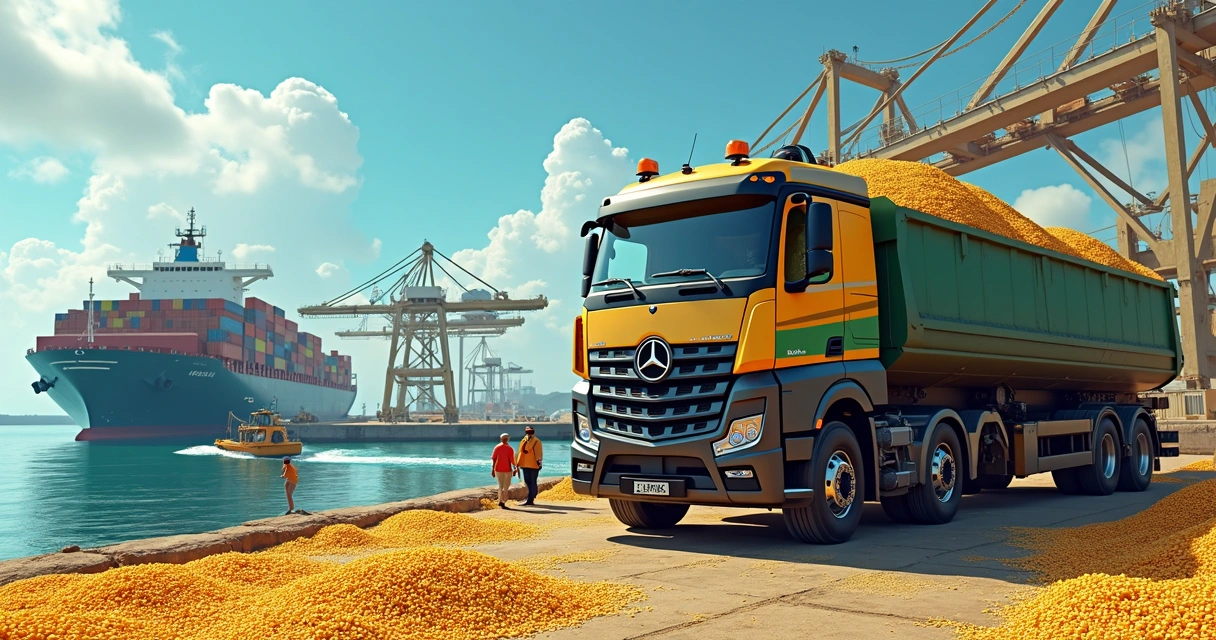

Logistics is strategic. COFCO’s success depends on efficient routes and low costs to reach Asia. Among the main outflow points for Brazilian soy and corn to China are:
- Port of Santos (SP): The country’s largest, handling millions of tons of grains per year.
- Port of Paranaguá (PR): A reference in agricultural outflow, connected to production hubs inland.
- Port of Itaqui (MA): Gateway for the Matopiba production (Maranhão, Tocantins, Piauí, Bahia), a region of agricultural frontier expansion.
These ports have privatized terminals, many under concession to companies with COFCO participation. Controlling logistical bottlenecks is ensuring predictability and, to a certain extent, bargaining power in international trade.
The volume of COFCO operations in Brazil
Approximately 15% of all soy exported from Brazil to China passes, directly or indirectly, through operations coordinated by COFCO. In some years, that percentage is even higher (COFCO International Annual Report, 2023).
To put it in perspective, in 2022 the Chinese state-owned company exported more than 13 million tons of Brazilian soy, in addition to corn, sugar and other commodities [COFCO International, 2023].
This volume places COFCO alongside the main global agribusiness players, reinforcing its influence not only in commercial negotiations but in political and infrastructure decisions within Brazil.
Impact on production and income of Brazilian farmers
For many rural producers, the presence of a large foreign buyer brings advantages:
- Guaranteed contracts and prices fixed in advance
- Easier access to rural credit
- Steady and predictable demand throughout the year
- Possibility to sell grain “at the farm gate,” without local intermediaries
On the other hand, there are concerns among sectors of agribusiness:
- Excessive dependence on Chinese buyers
- Pressure on price negotiations for the producer
- Little diversification of production destinations
These perceptions show how COFCO, even without much advertising presence, affects daily decisions on Brazilian farms.
The relevance of the Chinese presence for Brazil
When we talk about the impact of CHINA in Brazil, it is impossible to ignore the political and economic ramifications that stem from the increase in this commercial link.
We list some points summarizing how COFCO’s operations go beyond pure agribusiness:
- Infrastructure investment: the Chinese state-owned company injects resources into roads, railways and ports, financing projects from the North Arc to logistical improvements in the Southeast.
- Fresh money in producing regions: the presence of large foreign companies stimulates the local economy and heats up the labor market.
- Trade balance: the relationship boosts Brazilian exports, improving the national payments balance.
- Foreign policy: agreements between Brazil and China, often negotiated at the G20 and BRICS, reflect cross-cutting interests. Read more about strategic partnerships of the Americas with China and the European Union.
At Bom dia, América!, we highlight how Brazil’s bargaining power has increased since it became a “granary” for Chinese grains — but we draw attention to the subtlety of this balance, which can change with crises or external pressures.
The role of railways, highways and logistical investments
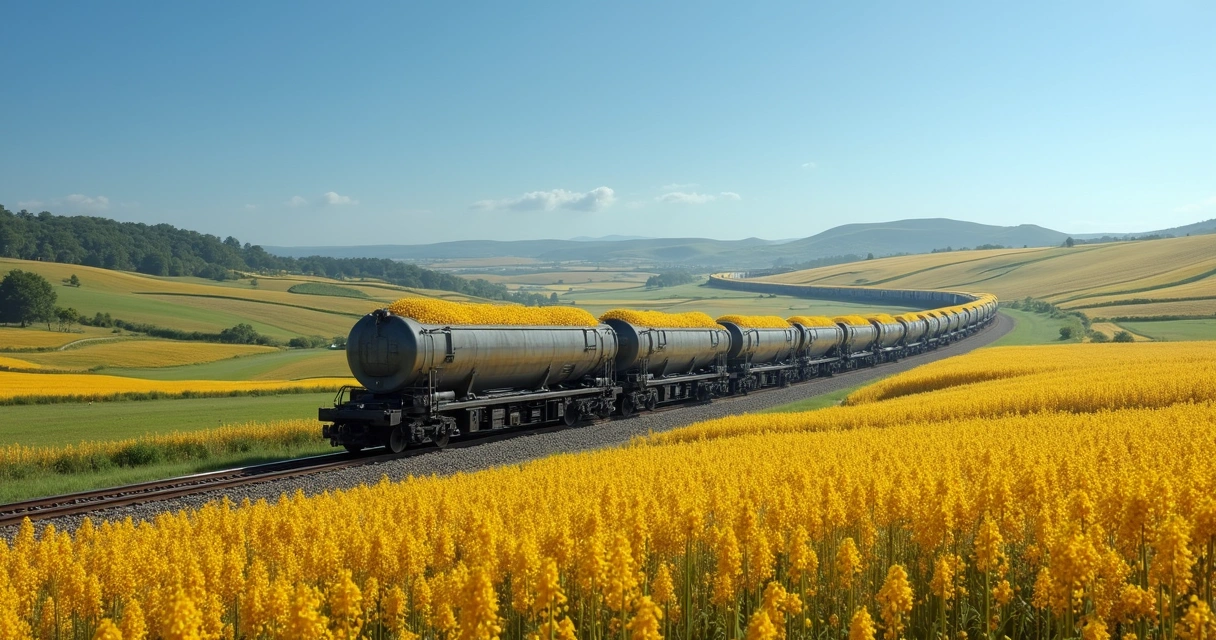
With COFCO’s growing presence, we see the emergence of new railways (such as the North-South Railway and the FIOL), in addition to increased resources directed to port modernization. Such investments favor local outflow — but also directly meet the needs of export flows to Asia.
The Brazilian farmer: benefits and concerns
Even with all the gains, there are legitimate doubts we hear in our conversations with rural producers from different regions.
On the positive side, many highlight:
- Security of outflow for the annual production
- Competition among buyers, raising potential profit margins
- Pre-harvest financing tied to future contracts
However, we heard, mainly from cooperative representatives:
- Fear of a “Chinese monopoly” in agricultural frontier regions
- Concern about a possible price drop if Chinese demand suddenly decreases
- Environmental risk, since international demand can stimulate predatory expansion over sensitive areas
The Brazilian government itself faces the task of balancing interests: it seeks to preserve national bargaining power, avoid excessive dependence and ensure environmental sustainability in the face of external pressures.
Brazil: protagonist in feeding China
The size of the Asian country’s population imposes unprecedented challenges on food planning. For China, losing access to the grain would mean a drastic increase in domestic food costs, a crisis in the animal protein sector and even social unrest.
Therefore, the Chinese presence at the base of Brazilian agribusiness production goes beyond the commercial sphere: it is strategic, almost existential, to guarantee the future food supply of a global power.
Brazil does not just export soy; it exports food security to China.
Brazil’s choice to meet this gigantic demand resonates throughout the chain:
- It pressures environmental and traceability agreements
- It determines minimum price policies for farmers
- It redefines priorities in logistical infrastructure
- It provokes geoeconomic disputes with other global players
These issues become even more complex in the face of the current China vs. USA dispute in Latin America. If you want to dive deeper, we suggest reading our detailed analysis on the new contest for Latin America.
Brazil-China relations: political and economic impacts
The tie established by COFCO redefines Brazil’s weight in the global food market.
Commercial negotiations at the “state-to-state” level expand the scope of diplomacy. This already appears in G20, BRICS and other multilateral meetings. By guaranteeing China’s food supply, Brazil gains a voice in international forums and can negotiate agreements of mutual interest.
However, from a global perspective, the enormous volume of grains exported to Asia reduces global availability, potentially creating price pressures in times of crisis, including for other importing countries in the Americas. This generates reactions in blocs, whether positive or negative.
It is also worth remembering that part of COFCO’s logistical investments can be converted into gains for Brazilian society as a whole, given that these structures also serve other sectors. As we analyze in the geopolitics section of Bom dia, América!, expanding the national logistics network and efficiency is an old priority, now driven by foreign interest.
COFCO’s role in South-South integration
COFCO also symbolizes a larger movement: Brazil’s opening to South-South cooperation. The country strengthens ties not only with China but with other emerging actors. Take the opportunity to read about how investments from the “New Silk Road” program impact CELAC economies and the American continent.
Diversifying relations can provide more protection for our producers and expand influence power on the international stage.
Nationalist rhetoric and fears of foreign influence have always existed when countries depend heavily on international partners. Our work at Bom dia, América! is to examine, without passion, the factual depth of what is happening in the contest for resources, infrastructure and sovereignty.
In COFCO’s case, we find a twofold scenario:
- Brazil plays a leading role in China’s food security, exerting influence by negotiating multimillion-dollar contracts and securing investments that would hardly come without external demand.
- On the other hand, part of the destiny of agribusiness — and the national economy — is tied to the decision of a foreign state, which increasingly requires public policies that defend autonomy and productive sustainability.
In the global context, this partnership directly influences food prices, trade routes from the Atlantic to the Pacific and even debates on climate change and sustainable development.
If you want to learn more about how multilateral organizations participate in these transformations, we suggest reading about the World Bank’s role in the development of the Americas.
Reading tips and courses on agribusiness and geopolitics in the Americas
To delve more practically into the topic, we recommend some reading and study options. We list Amazon products and relevant courses:
- Soy: History, Cultivation and Commercialization – A reference book covering soybean cultivation in Brazil.
- Agribusiness in Futures Markets and Commodities – To better understand the global grain market.
- Course Agriculture 4.0: The New Green Revolution – An update on the main sector trends, focusing on technology and sustainability.
Prospects for the future of the Brazil-China relationship in agribusiness
We know that traceability technology, environmental pressures and new sustainability requirements are already present in this sector. COFCO, as a Chinese state arm, carries these demands in its relations with national suppliers.
On the Brazilian side, the expectation is to further sophisticate production, seek market diversification and ensure that the benefits of the link with China return to the entire productive chain, including small and medium rural entrepreneurs.
The future, always uncertain, is likely to be marked by:
- An increase in Asian demand for animal protein, driving even more purchases of national soy
- More logistical investments, including alternative export corridors
- Heightened public debates about sustainability, transparency and environmental protection
- New international alliances, inside and outside traditional forums (G20, BRICS, CELAC)
To stay updated on developments in agricultural geopolitics, we recommend our special geopolitics section of the Americas.
References
- COFCO Corporation. Annual Report 2023. Available at: https://www.cofcointernational.com/annual-report-2023 (Accessed: Apr. 2024).
- Ministry of Agriculture and Livestock (MAPA). Export Statistics 2023. Available at: https://www.gov.br/agricultura/pt-br (Accessed: Apr. 2024).
- Revista Carta Capital. “Chinese power in Brazilian agribusiness”, 2022.
- Ports and Logistics, Agência Brasil. “Foreign investments in railways and agribusiness infrastructure”, 2023.
- BRAZILIAN ASSOCIATION OF VEGETABLE OIL INDUSTRIES (ABIOVE). Annual statistics, 2023.
Conclusion: lessons from the COFCO case for Brazil and the Americas
By investigating COFCO’s role in Brazil, we understand that the Sino-Brazilian relationship via agribusiness is not only commercial. It is an instrument of foreign policy, regional development, logistical modernization and influence in the global food market.
“China is not just the largest buyer of Brazilian agribusiness. It has become the largest operator. COFCO, a Chinese state-owned company and Fortune 500, is today the largest agricultural exporter in Brazil. In 2024, it moved about 17 million tons of soy, corn and sugar. Not as a client. As an operator of the chain.” ( Meng Wu, strategist in international business in Brazil)
For the reader of Bom dia, América!, the reflection remains: strengthening the country’s global protagonism will only be possible if there is a balance between serving the Asian partner and protecting national interests in the long term. This includes policies that value sustainability, transparency and economic autonomy.
After all, who controls food, controls power.
If you want to follow geopolitical trends and understand changes in the Brazil-China relationship, we invite you to support the blog and share this content. Together, we can deepen the debate and produce relevant knowledge for all of society. The future of the Americas depends on reliable information, critical analysis and civic engagement. Come learn more about Bom dia, América!!